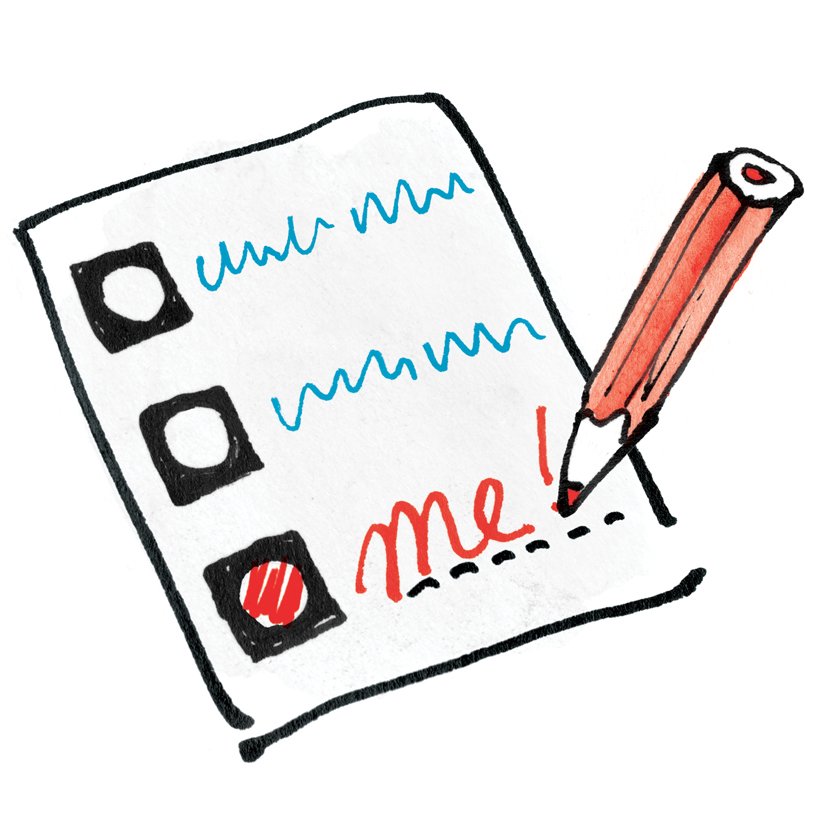
A new way to cast a vote for energized communities and residents
Service Ballots offer voters a practical way to get involved and help shape their communities.
By giving citizens a second “service ballot” during elections, governments can tap into the skills, interests, and goodwill of residents eager to contribute to their communities. Whether it's serving on a public board, joining an advisory committee, or volunteering for civic initiatives, service ballots create a direct, accessible path to participation—building stronger, more inclusive governance between elections.
What is a Service Ballot?
A service ballot is a second, optional ballot offered to voters during an election. After casting their vote, citizens can fill out the service ballot to express interest in getting more involved in their community.
They can:
Offer to serve on public boards or advisory committees
Volunteer for local projects or civic initiatives
Indicate areas they care about—like housing, climate, or public health
The information is collected separately and used by local governments to connect with residents who want to contribute.
It’s an easy, low-barrier way to turn civic interest into real community involvement—no campaigning, no applications, just a simple way to raise your hand and say: I want to help.
Why Implement Service Ballots?
Many communities struggle to recruit diverse voices for public boards, committees, and civic initiatives. At the same time, countless residents want to help—but don’t know how to get involved.
Service ballots solve this. By inviting people to volunteer at the same time they vote, local governments can:
Grow the pool of engaged residents ready to serve
Reach more diverse participants across age, background, and experience
Reduce recruitment costs and time spent filling roles
Build trust and transparency by showing residents their voices are valued
Strengthen democracy between elections, not just on voting day
It’s a simple, scalable tool that helps governments and communities work better—together.
Service Ballots Benefits


Adaptable to Local Needs
Can be tailored to different municipal priorities, issues, and structures—urban or rural, small or mid-sized communities.


Promotes engagement
Transforms voting into an opportunity for deeper civic involvement and ongoing participation.


Builds a Volunteer Pipeline
Creates a ready pool of residents interested in serving on boards, committees, or civic projects.
Easy to implement
Simple to integrate into existing election processes with minimal cost or disruption.
Amplifies Diverse Voices
Reaches a broader range of people, helping public bodies better reflect the communities they serve.
Strengthens Government-Resident Connection
Opens direct communication channels between local governments and engaged citizens.
Frequently Asked Questions
-
A Service Ballot is a way for governments to build a roster of volunteers to advise public decision-makers and participate in other community activities. After casting their electoral ballot for their preferred candidate, voters are invited to fill out a short form—called a Service Ballot—indicating the kinds of volunteer opportunities that interest them. These could include attending a public meeting, joining an advisory committee, or helping with other local initiatives.
-
After voting, residents are invited to complete a “Service Ballot,” outside the voting area, using a QR code on their phone or a tablet provided on-site. Staff are available to help as needed.
The Service Ballot collects basic contact information and allows residents to indicate what kinds of civic roles or topics they are interested in—such as serving on committees, joining public boards, helping with events, or supporting local initiatives.
All submissions go into a secure database managed by the municipal Service Ballot Coordinator. When a volunteer opportunity arises, the Coordinator filters the list and contacts residents who match the criteria.
-
Service Ballots are launched on election day to remind residents that their role in making their community better goes beyond the ballot box. By offering a Service Ballot at the same time as people are voting, governments can convert a fundamental interest in public service into action, lower barriers to participation, and reach a much broader and more diverse cross-section of the community than standard recruitment methods.
Residents can also complete a Service Ballot after election day. The ballot portal remains open until the next election when a new Service Ballot is issued.
-
Service Ballots help identify volunteers for a range of opportunities that are hosted or run by the municipal government and its agencies or boards. This includes:
Serve on a municipal advisory committee
Serve on a public board or commission (e.g., library, police, economic development)
Participate in focus groups or public consultations
Volunteer for a citizens’ assembly or resident panel
Support community events and festivals
Assist with environmental stewardship projects (clean-ups, tree planting, trails)
Volunteer for emergency preparedness or response support, including fire and rescue
Help with recreation or youth programs
Support seniors’ programs or age-friendly initiatives
Contribute to arts, culture, or heritage activities
Provide administrative or clerical support for civic initiatives
Act as a community ambassador or event host
Participate in planning or policy review workshops
Support accessibility and inclusion initiatives
Receive and respond to calls for short-term or one-time civic opportunities
Eligible charities or non-profits may also be able to recruit volunteers for their needs through the ballot.
-
No. Service Ballots are non-binding and separate from the electoral ballot. They are not used to elect anyone or influence the vote. Instead, they are used solely to gather expressions of interest in civic participation.
-
Yes. All Service Ballot data is managed in compliance with privacy laws and election regulations. Information is stored securely and used only for civic engagement purposes by authorized municipal staff.
-
Traditional recruitment often depends on costly campaigns and typically only reaches the segment of the population already engaged in a specific issue. Service Ballots are proactive, inclusive, and timed to engage citizens when they’re already thinking about public life—election day. They offer a municipality an opportunity to engage beyond the ‘usual suspects’ and to hear from a wider cross-section of their population.
-
We think so! Because they’re offered on election day and beyond, Service Ballots are a great way to create a deep pool of volunteers and to get people thinking about volunteering. Municipalities can build on this by reaching out to specific underrepresented communities.
-
A pilot program is being developed by MASS Civic Innovation Labs in partnership with small and mid-sized municipalities across Canada, with support from the Metcalf Foundation.
-
Municipalities and regions interested in piloting Service Ballots or learning more should contact the Service Ballot network using the contact form at ServiceBallots.org.
Please note that only municipalities from Ontario, British Columbia, Manitoba, and Prince Edward Island are eligible for the pilot partnership during this phase of the project.
Service Ballots are an initiative of MASS Civic Innovation Labs and are generously supported by the Metcalf Foundation.
MASS CIL is the non-profit arm of MASS LBP, a Toronto-based democracy organization known for pioneering the use of civic lotteries and citizens’ assemblies in Canada. MASS works with governments and institutions to engage residents in meaningful decision-making, helping to build more inclusive, participatory public policy through innovative democratic practices.
The Metcalf Foundation is a Canadian charitable foundation that supports bold ideas and leadership in inclusive local economies, climate transition, and the performing arts. It works to foster vibrant, equitable and democratic communities across Canada.
Let’s bring Service Ballots to your community.
If you would like to work with us to introduce Service Ballots as part of your next local, regional or national election, write to us.